ONE SCORE.
128 BPM × 32 beats is exactly 15 seconds. Every cut, pop and kick is written as a beat number, and picture and sound read the same list.
 A WORLD WORTH
Every frame and every note is computed from a single beat score while you watch. Drag the timeline to scrub; press play with sound for the full cut.
128 BPM × 32 beats is exactly 15 seconds. Every cut, pop and kick is written as a beat number, and picture and sound read the same list.
Expo glides to a stop, back overshoots and snaps home, bounce rebounds. The graph-editor scene draws the curves themselves.
Shapes morph point for point, the tunnel and crate use hand-written perspective, and the final word is sampled into particles.
Each frame averages several renders across its own slice of time. Cuts split red, green and blue; the HUD is drawn inverted so it reads on any colour.
Kick, noise hats and snares, seven detuned saws per note, and a sidechain duck on every kick. Then 0.1 s of total silence before the drop.
The Last Caretaker asks you to rebuild humanity on a flooded Earth. We're exploring what happens when a second caretaker joins the work.
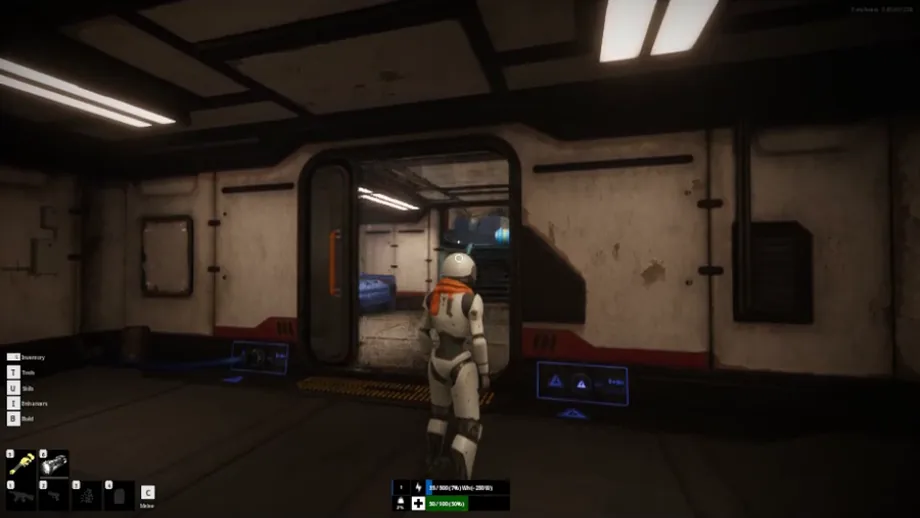
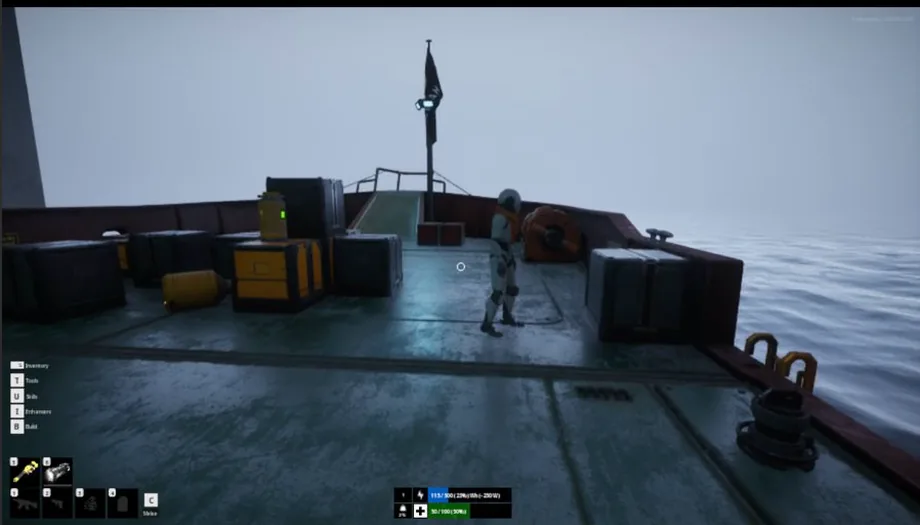
A shared world. A shared ship. Separate hands at the helm, on the deck, and in the cargo hold.
Guest at the helm. Host aboard.
Both inside the same moving world.

Steer, move, carry, repair, open doors, lift crates. Open a capture to see what passed; check build status for the newer cable, pipe and dropped-item milestones.
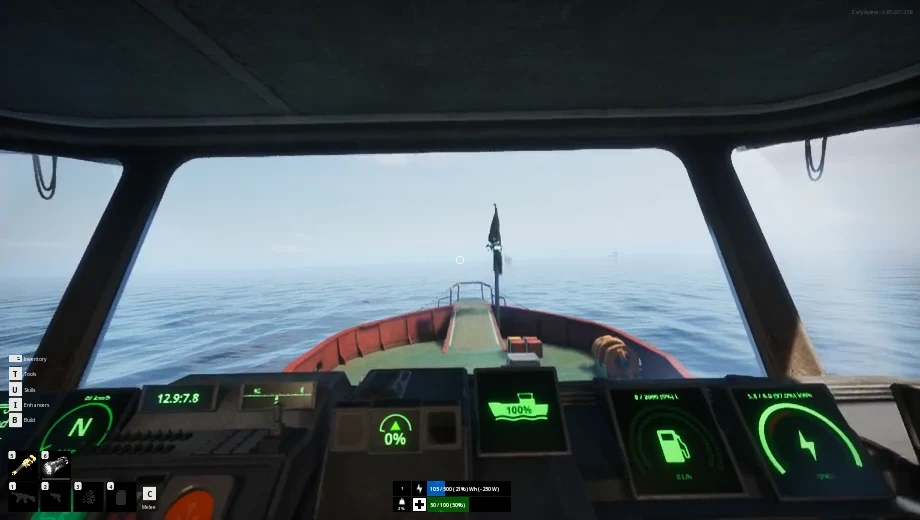
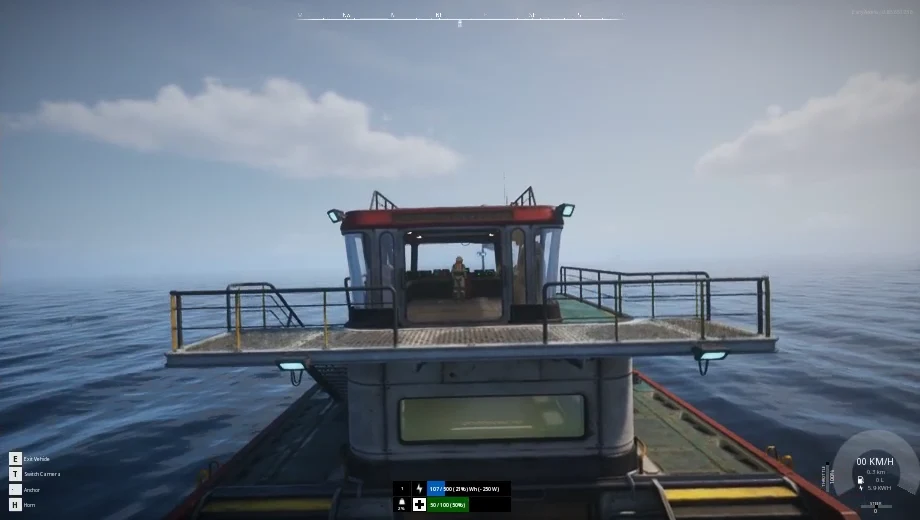
07 PLAYTESTS / CLICK TO EXPANDGuest view from the real helm during a drive using the normal game controls.
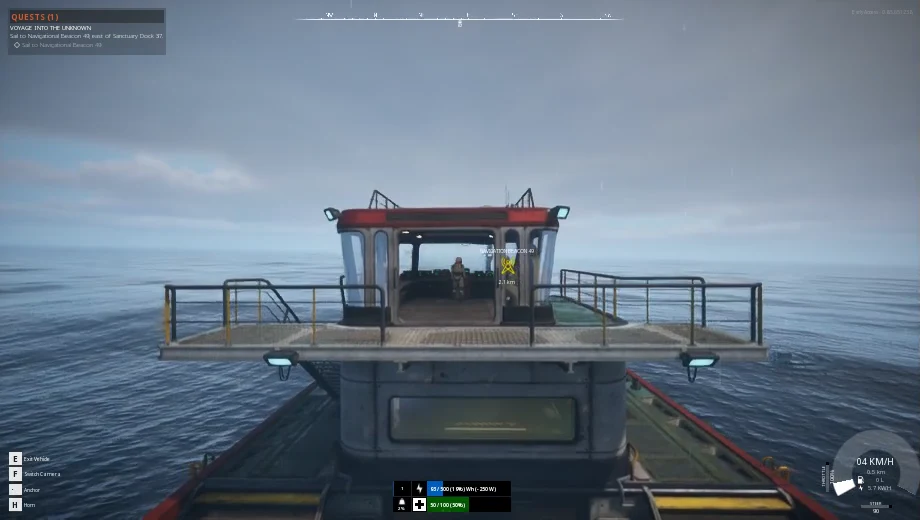
Guest view of the ship underway with the host at the helm. The passenger can keep moving as the ship turns.
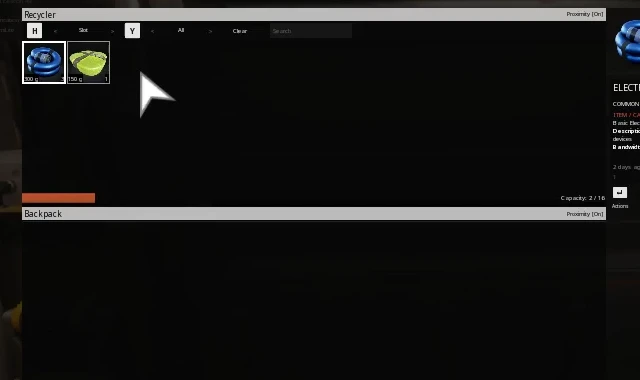
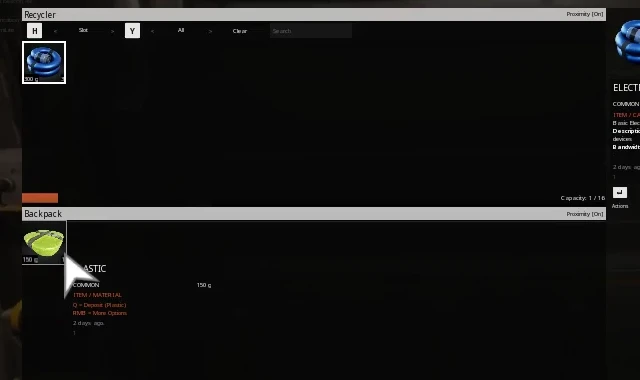
One Plastic moves from the onboard Recycler into the host backpack while the guest keeps driving.
These captures are from experimental builds. Shared loot, cables, fuel pipes and restart-safe dropped items also passed in scratch runs; Build67 remains the installed fallback.
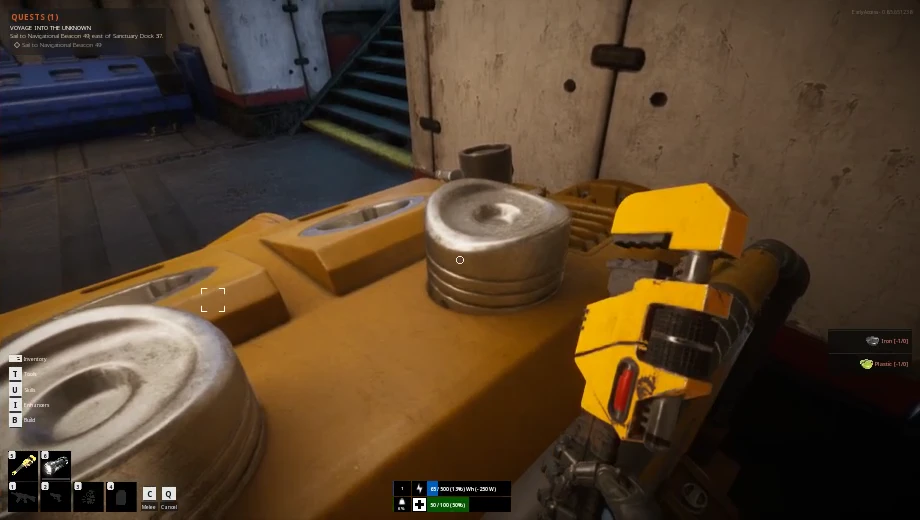
The guest holds the wrench on the Diesel Engine. The repair is shared, and its material cost comes from the guest.
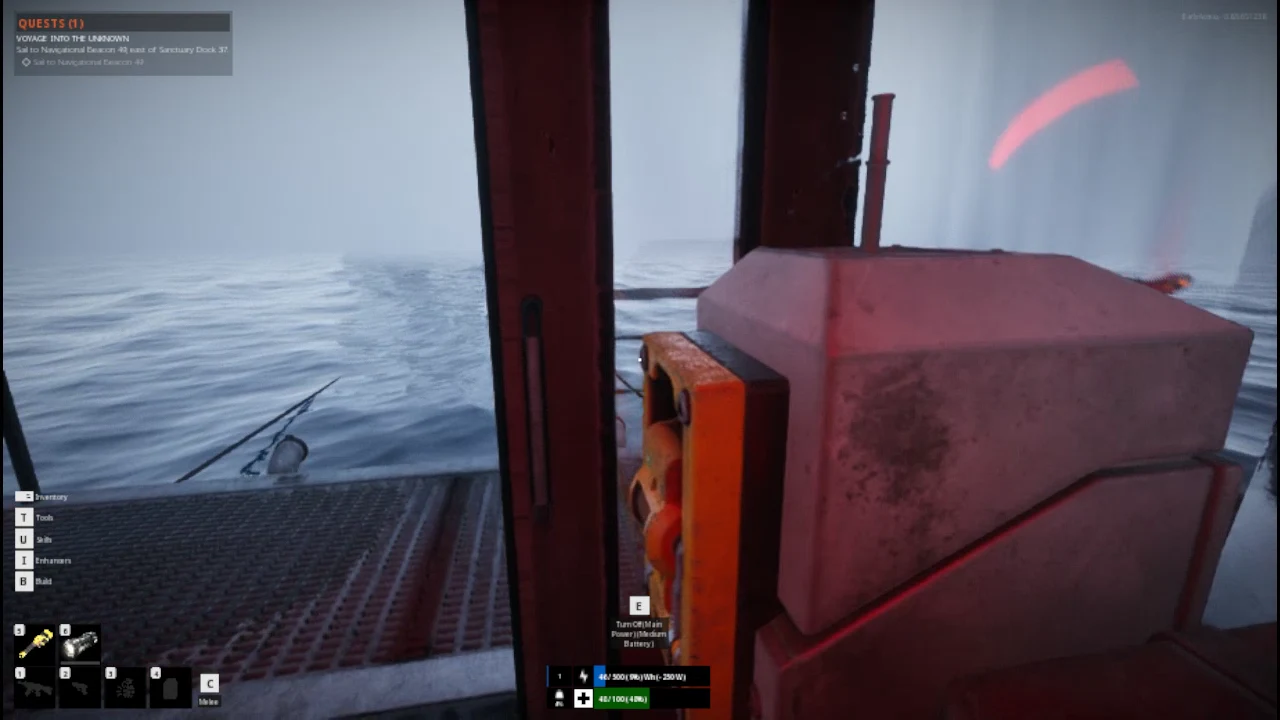
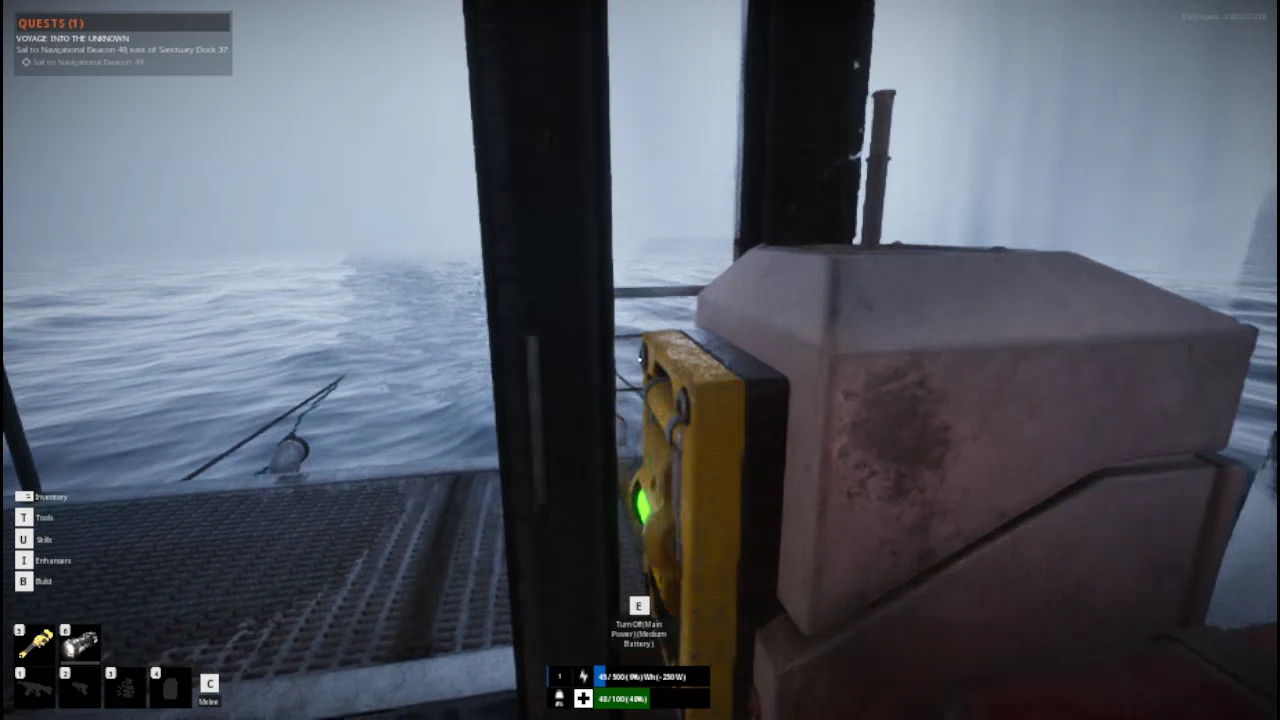
The guest turns Main Power back on after a restart. The switch indicator and the ship's lighting update in both game views.
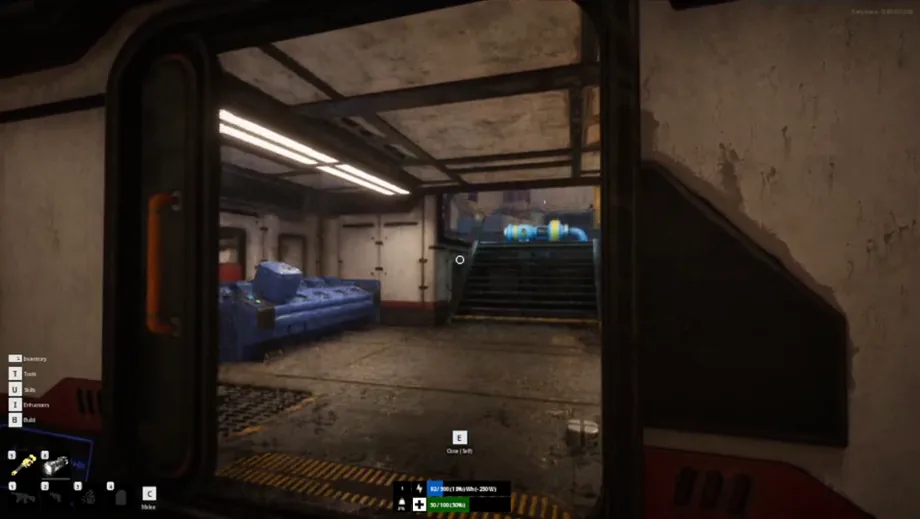
Host and guest each press the normal E on the barge's powered door. The guest's press is routed through the host; the panel moves in both game views.
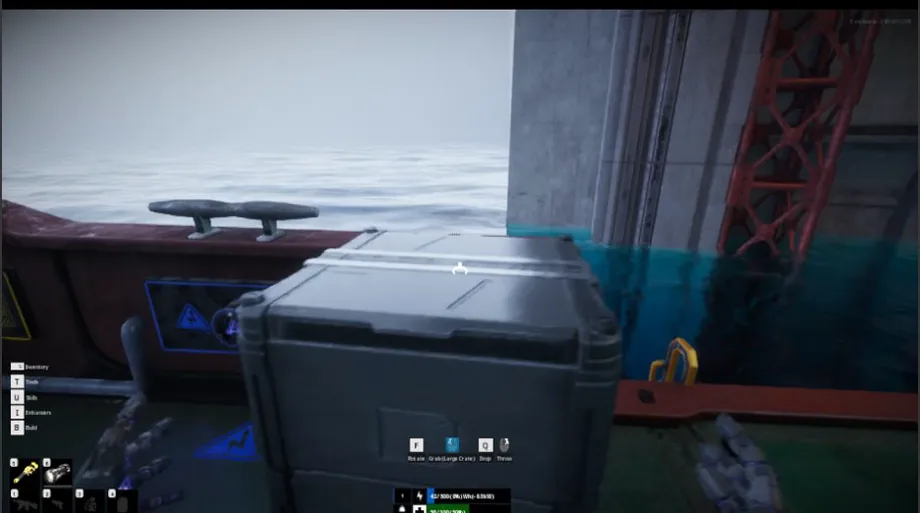
The guest uses the normal grab on a crate welded to the moving barge. The host keeps the physics; both views show it in the same place after release.
The shared-ship loop has real playtest proof. Scratch builds now also share doors, crates, loot, cables, fuel pipes and dropped items, several of them across restarts. The next step is proving the full journey on one build.
Build67 remains the installed playable fallback. The newer milestones now live together on one scratch integration branch, but that build has not replaced the installed game.
Cable changes made on an unanchored, moving ship now restore on both peers after restart. The full offshore gate still fails: after a restart the moved ship can roll back toward its old dock position.
Fuel pipes now connect and disconnect through the same host authority as cables, and a test-filled tank matched on both clients through restart. The Diesel Engine still reports an unmet requirement; normal consumption has not passed.
Engine and hull damage presentation matches on both views in a live test, and the host can now set the shared time of day in scratch sessions. Weather agreement still needs a same-session check.
The machine's full vanilla lifecycle is traced, and power already reaches it through the shared cable. A cycle only starts when an item is carried physically into the intake, which automation cannot do safely.
Host and guest E pickups share supported floor loot through host authority, with retries and restart-safe records. The guest now earns native loot XP. Only one pre-placed loot type has been found in the test world.
A survey of normal E interactions found that fishing and buoy containers share one box class; the station hatch is not interactable. The recording tools are ready.
Two different barge-mounted crates pass a guest grab, move and release, with both views agreeing on the final position. Loose props and restart persistence are not covered.
Water and gas share the pipe authority by contract, but the test barge has no valid native water connection, so neither has run live.
The 15-minute and 20–30-minute alpha gates have not passed. Reconnects and campaign coverage remain open, and combat is parked and off by default.
Join. Sail. Work together. Save. Come back.
The same world, on both screens, all the way through.
Playtests use isolated copies of saves, recorded gameplay and checks of the game's own state. The newer milestones above were proven on scratch builds with retries, duplicates and restarts forced on purpose; a single feature pass or restart does not establish full campaign readiness.